
Crawl space vapor barrier in Pasadena CA - ground covered and sealed up the walls
Musty smell, damp dirt or torn plastic under the house? We lay a sealed liner so less ground moisture rises under your floors.
- Service
- Crawl space vapor barrier
- Call
- (626) 345-7649
How can you tell your crawl space needs a liner?
Musty smell in the house
If the rooms over the crawl space smell musty, especially after the house has been closed up, moisture from the bare ground below is usually working its way up. Left alone, that damp air keeps feeding mildew on the wood and on anything stored down there.
Bare or damp dirt below
When you open the access and see bare soil, or soil that looks dark and damp in patches, nothing is stopping ground moisture from rising into the space. The longer it goes, the longer your floor framing sits in damp air.
Old plastic torn or loose
A lot of older houses have a thin sheet down there that's torn, bunched up or stops well short of the walls. A liner full of holes and gaps doesn't do much, so the uncovered ground keeps putting moisture into the air under your floor.
Do you need a vapor barrier in your crawl space?
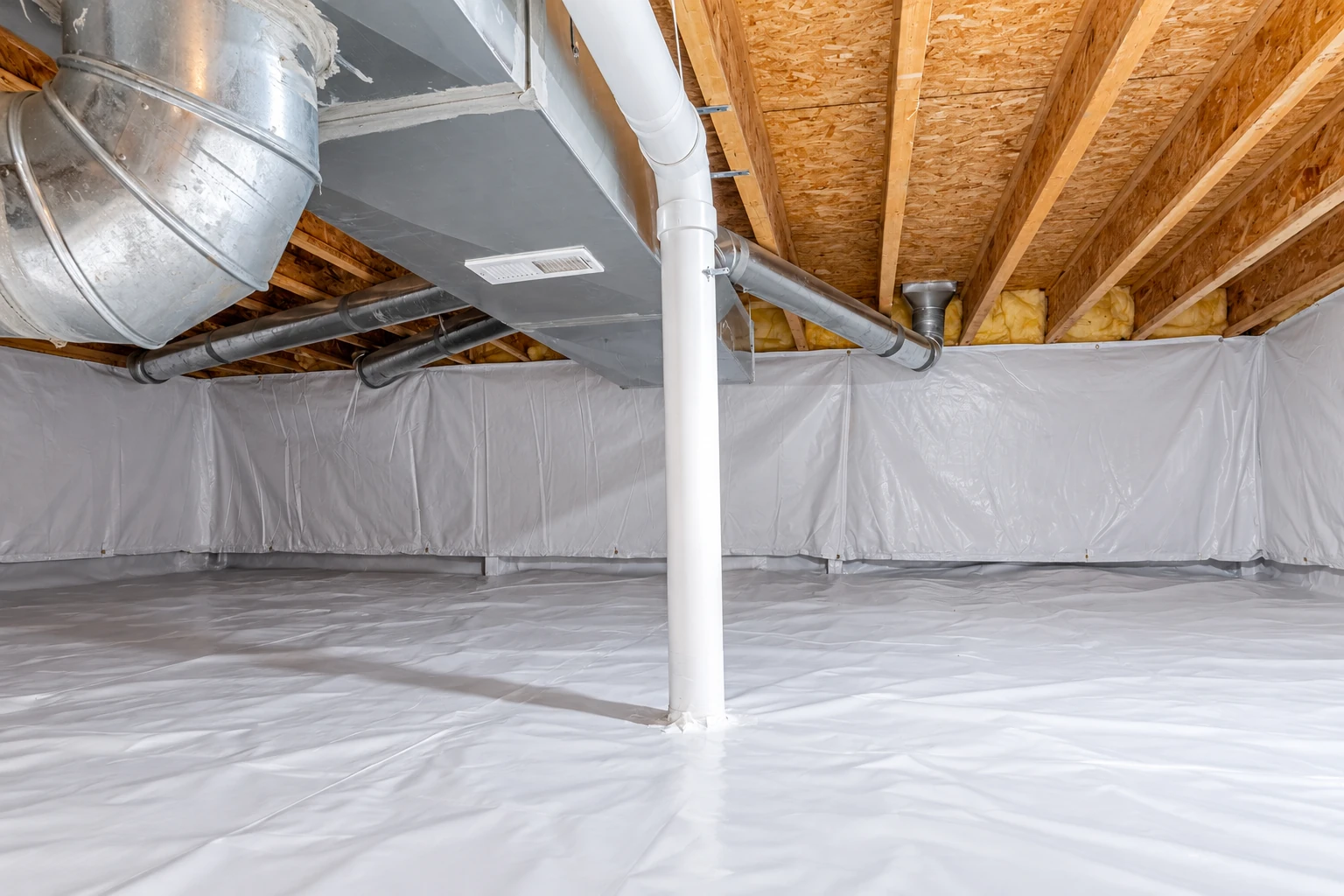
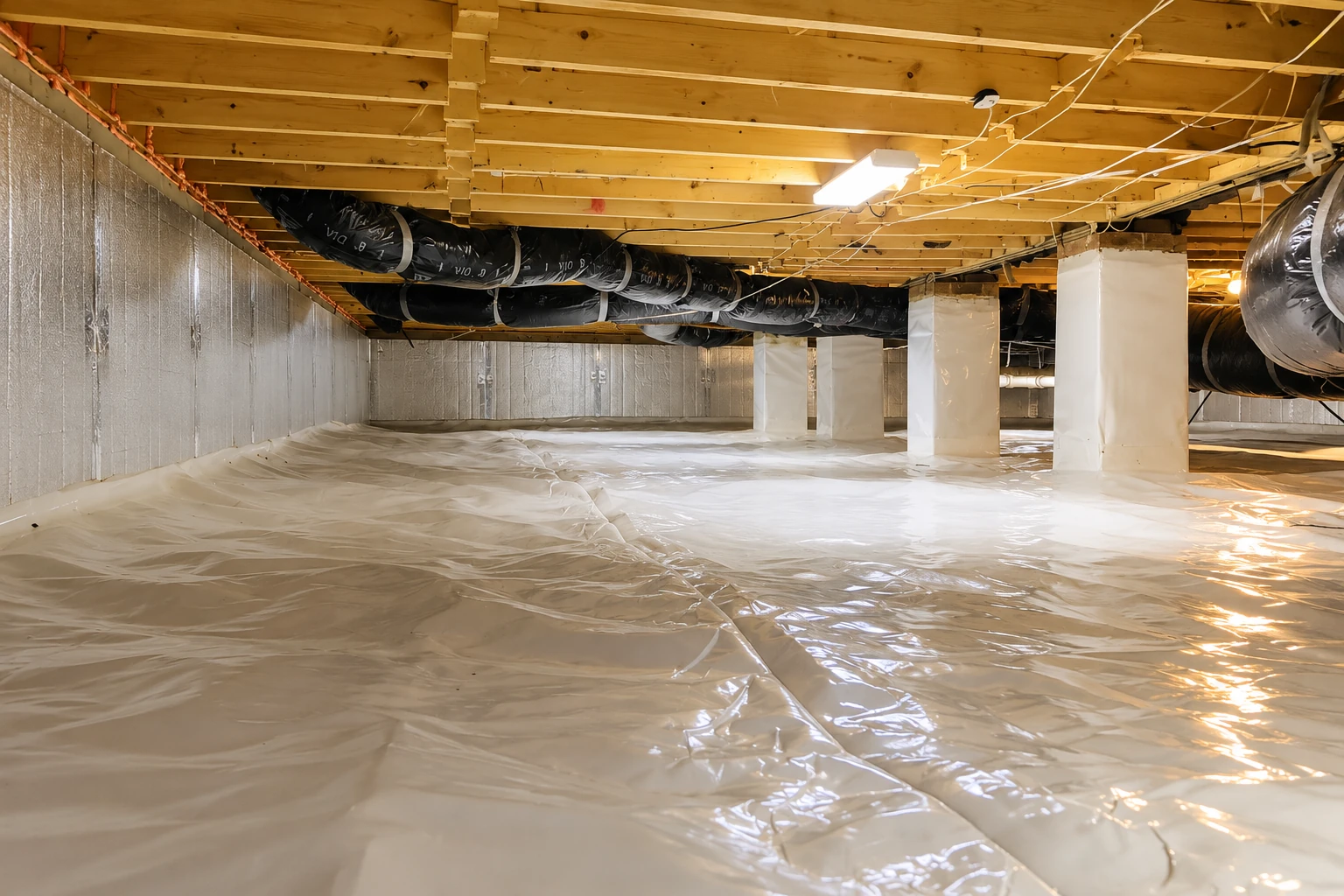
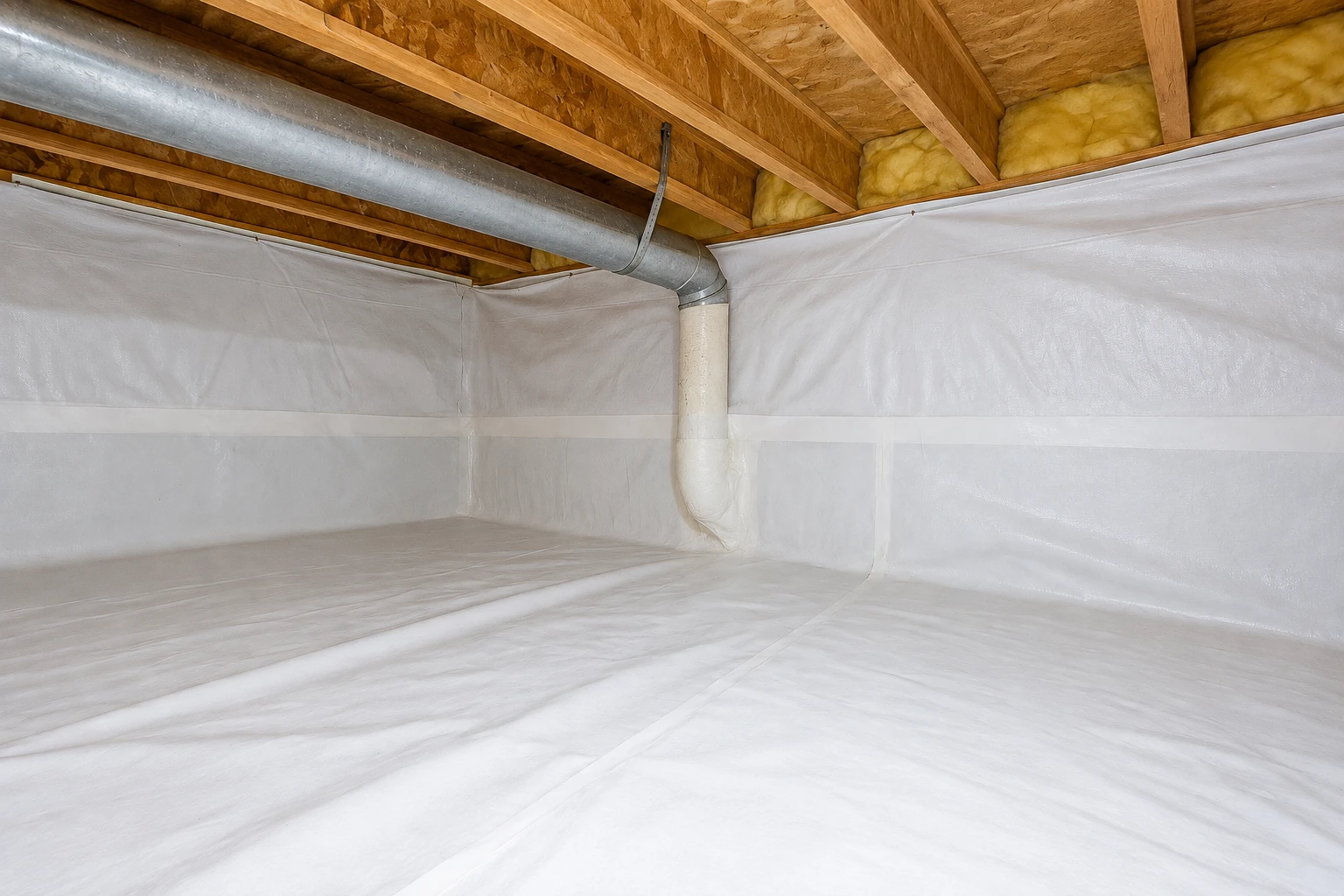
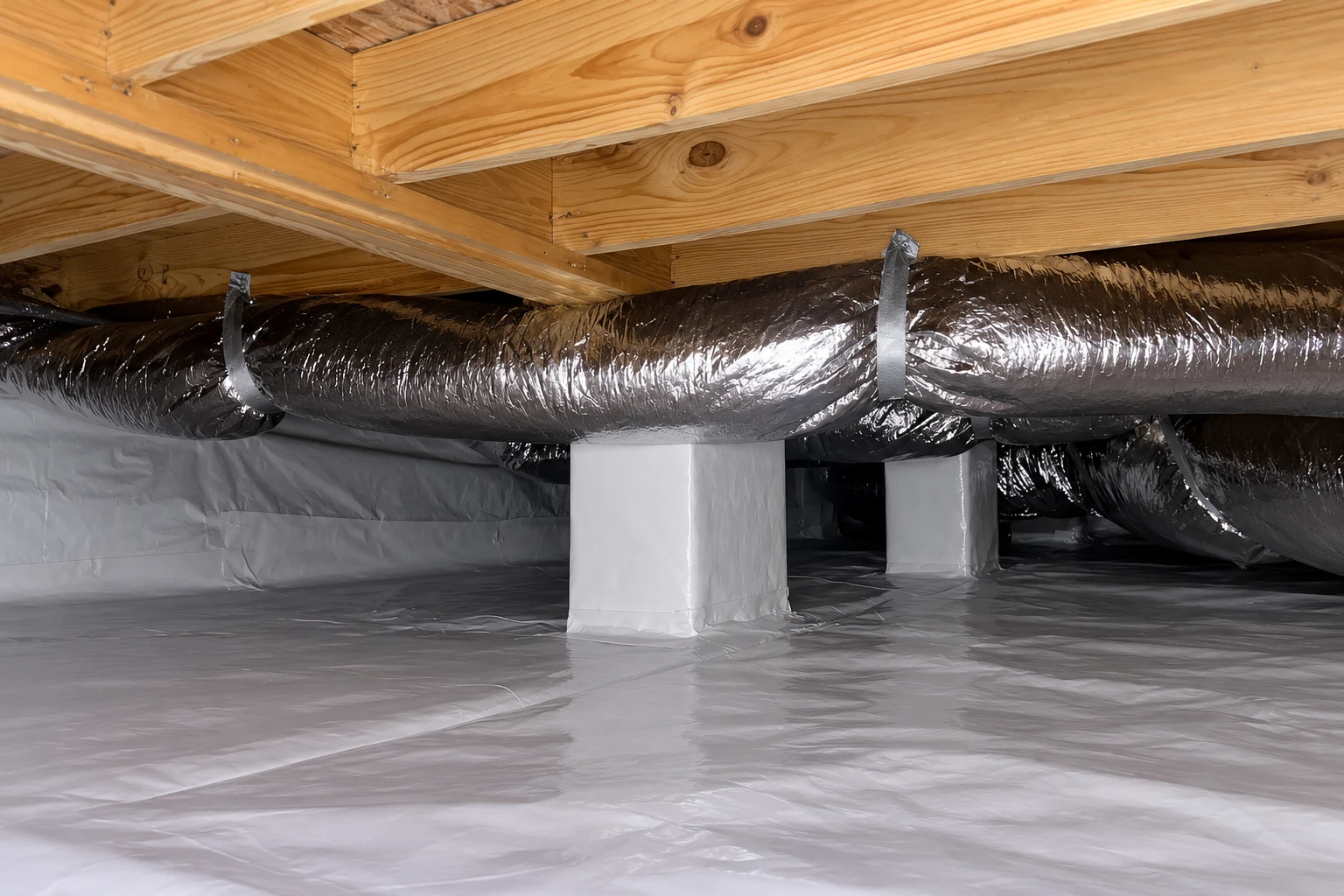
A crawl space vapor barrier in Pasadena is a plastic liner laid over the bare soil under your house, so less ground moisture and fewer soil gases, such as radon, rise into the space below your floors.
Most calls start with a musty smell, a torn sheet of old plastic or a repair under the floor that left the ground open, and the real question is how far to go, a liner on the floor or a fully sealed crawl space. The price moves with the size of the space, how much has to come out first, the liner you pick and that choice of scope, and the schedule mostly turns on how easy the space is to get into and whether water has to be fixed first. I'll lay both out in a written estimate for your house. We're based in Pasadena and work across the city and the cities around it, including Glendale, Burbank, Arcadia and Altadena.
Details to note before an estimate
- Rough size of the crawl space
- Where the access door is
- Old plastic, debris or stored items
- Damp spots or standing water
How we install a crawl space vapor barrier
I go into the crawl space myself first, because standing water, droppings, old wiring or a loose duct need to be found before anything gets covered up. Then our crew clears out the debris and old plastic, lays the liner over as much of the ground as we can reach, runs it up the foundation walls and seals around the pipes and along the seams, so moisture can't slip up through the gaps. Once that's down, I talk it through with you, whether a floor liner is enough for your house or the space needs more, and why I think so.
A crawl space liner is one part of keeping moisture in check, and if you're also worried about damp in walls or other parts of the house, our vapor barrier installation work covers those spaces. Air in a house tends to move from the bottom up, so it often pays to look at the top as well, and attic air sealing, closing the gaps around lights, pipes and the hatch before insulation goes on, keeps that air from leaking out through your ceiling.
Other work that pairs with a crawl space liner
Vapor barrier installation
Worth a look if moisture is showing up in walls or other spaces beyond the area under the floor.
Attic air sealing
Plugging the leaks at the top of the house cuts drafts and keeps the air you pay to heat and cool from slipping into the attic.
What happens after you call about your crawl space
Call or send a request
You call (626) 345-7649 or fill out the form, and we get back to you to set a time for me to come out. It helps to tell us where the crawl space access is so we can plan for it.
I look at it with you
I come out myself, go into the crawl space and show you what's down there, from old plastic to wet spots and pipe openings. You get a written estimate that lays out what gets done first and why, so you can see exactly what's driving the price.
Our crew does the work
When you're ready, our own trained crew clears the space and puts in the liner. They work under the floor through the access, so you can usually stay home while they're down there.
We go over the finished job
Before we call it done, I go over the liner with you, including the walls, the seams and the spots around pipes. If anything doesn't look right to you, that's the time to say so, because our promise is simple: your satisfaction, guaranteed.
Questions about crawl space vapor barriers
How much does a crawl space vapor barrier cost in Pasadena?
The two choices that move the cost most are how much of the crawl space you seal, a floor liner or full encapsulation, and how thick a liner you pick. After that it comes down to the size of the space, how tight the access is and how much has to be cleared out first. I'll give you the number for your house in a written estimate after I've been down there.
What is the difference between a crawl space vapor barrier and encapsulation?
A vapor barrier covers only the crawl space floor to cut down ground moisture, while encapsulation also lines the walls, seals the vents and adds a dehumidifier, sometimes with insulation and drainage. Closing the vents isn't a small add-on, because an older federal guide warns that sealing vents alone can raise moisture and can be deadly if a furnace or water heater down there depends on that outside air. If you have gas equipment in the crawl space, I'll check it before we talk about closing anything.
How long does a crawl space vapor barrier last?
One crawl space guide puts a 12-mil reinforced liner at 15 to 20 years and a 20-mil liner at 20 to 25 years or more, mil being the sheet's thickness in thousandths of an inch. Under the house the plastic is out of the sun and weather, so what usually ends it early is a tear from someone crawling over it, seam tape drying out or a pipe opening that was never sealed. A thicker sheet costs more now and pushes back the day you replace it.
How do I get my crawl space ready for a vapor barrier?
Clear out anything you've stored down there and any loose debris you can reach, so the liner can cover the ground all the way to the walls. Make sure we can get to the access door easily on the day, and we'll handle the rest of the clearing.
Can an unlicensed handyman install a crawl space vapor barrier in California?
Only on a small job, because California's exemption for minor work tops out at $1,000 and applies only to work that needs no permit, done by someone with no employees on the job. Anything bigger, or any job with a crew, calls for a licensed contractor. We're licensed and fully insured, and our own trained crew does the work.
What is the best way to install a crawl space vapor barrier?
Federal installer guidance calls for a liner at least 6 mil thick that covers the whole floor, or as close to it as you can get, and runs up the walls, columns and footings, which makes it a fair yardstick when you compare quotes. In a crawl space that's kept closed, the same guidance has the seams and pipe openings sealed with a sealant made for the liner, and any rips from other work down there sealed before the job counts as done. Water comes first, though, since research from Louisiana found a ground cover can do more harm than good if rainwater ends up on top of it.
Get a written plan for your crawl space liner
Send the form and we'll reply within one business day to set a time for me to come out. The estimate is free, done at your house and obligation-free, and you'll have the plan and the order of work in writing before you decide anything.
Explore our services and areas
Services
- Spray foam insulation
- Attic insulation
- Blown-in insulation
- Home insulation
- Insulation removal
- Crawl space insulation
- Wall insulation
- Air sealing services
- Basement insulation
- Closed-cell foam insulation
- Open-cell foam insulation
- Commercial insulation
- Vapor barrier installation
- Attic air sealing
- Retrofit insulation
Book a look under your floor
Call (626) 345-7649 or use the form, and let us know where the access is and whether there's gas equipment, standing water or old repairs down there, so I come ready for what's below.